Pragmatic direct approaches for tooth wear from GC
👆 Click on any step below to discover more.
 Identification
 Strategy
- Pre-restorative orthodontics
- Dahl principle
- Full-mouth restoration
Direct techniques
AND / OR
Indirect workflow
 Maintenance
affected by sleep bruxism*
*Azeez, A. A., Sheri f, S., & Franca, R. (2021). Statistical estimation of wear in permanent teeth: a systematic review. Dentistry Review, 1(1), 100001.
affected by tooth wear**
**Zieliński, G., Pająk, A., & Wojcicki, M. (2024). Global prevalence of sleep bruxism and awake bruxism in pediatric and adult populations: a systematic review and meta-analysis. Journal of Clinical Medicine, 13(14), 4259.
Identification
Wear is most often multi-factorial and a combination
of the following four types of wear.
Erosion

Typical pits, concavities and smoothened surfaces caused by acids in food, drinks and/or stomach acids
– Courtesy of Dr P. Swerts, Belgium
Abrasion
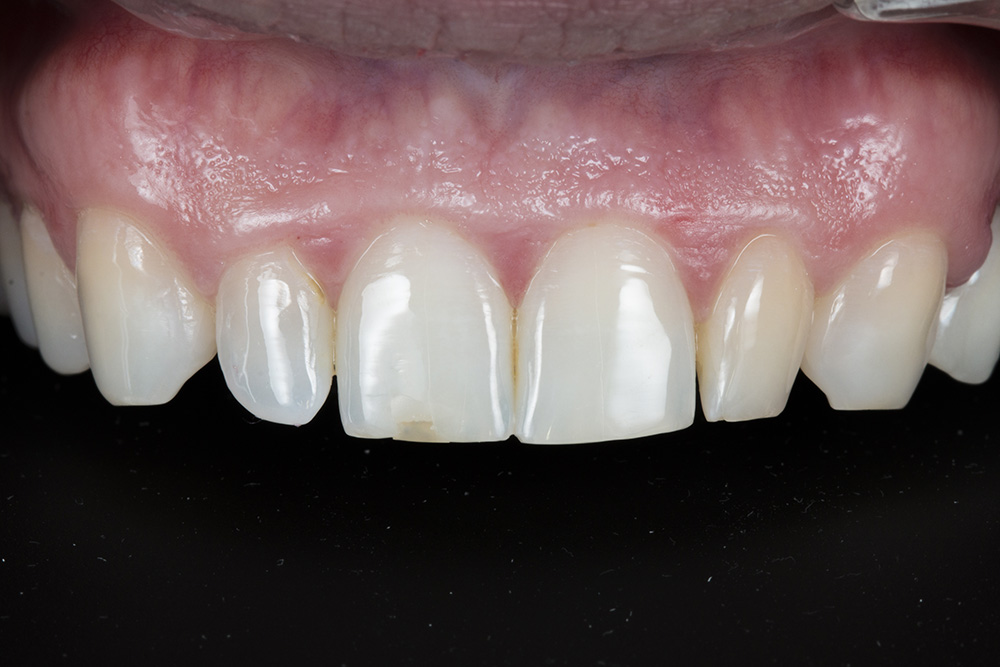
U-shaped notches cervically or other atypical wear lesions from foreign objects or habits
– Courtesy of Dr A. Salehi, France
Attrition
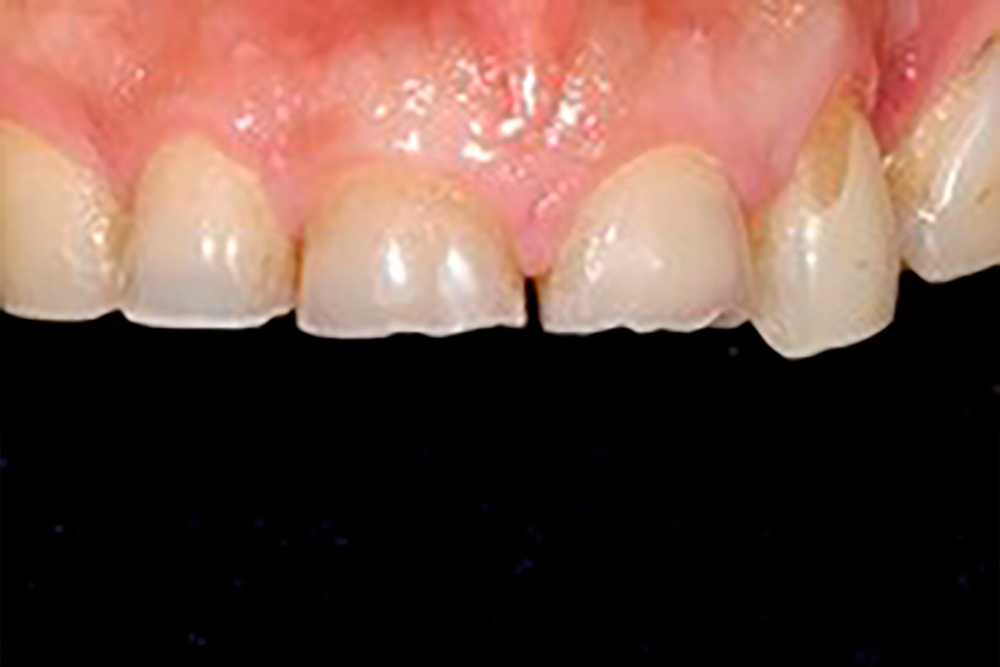
Flattened surfaces, from tooth-to-tooth wear from grinding, clenching and chewing
– Courtesy of Dr K. Karagiannopoulos, UK
Abfraction

Cervical V-shaped cavities from repeated flexure due to clenching and grinding.
– Courtesy of Dr. S. Moretto, Belgium
Strategies
A pre-restorative orthodontic treatment is needed when the patient has malocclusion and wear is prevalent across anterior and posterior teeth. When wear is only located in the anterior area, the Dahl Principle can be used instead of an orthodontic treatment. Finally, if there is generalised wear but occlusion is normal and the teeth are properly aligned, then only a restorative treatment will suffice.
Pre-restorative orthodontics

followed up by full-mouth restoration
Best suited for: Cases of dento-alveolar compensation or when malocclusion or crowding is present
– Courtesy of Dr S. Daroste, Sweden
Dahl-Principle

Best suited for: Patients with localised anterior wear. By restoring the anterior teeth (shown in white wax-up) in supraocclusion, relative axial posterior tooth movement is allowed, enabling final occlusion to be reached.
– Courtesy of Dr K. Karagiannopoulos, UK
Full-mouth restoration alone

Best suited for: Generalised tooth wear without malocclusion
– Courtesy of Prof M. Peumans, Belgium

TIP! Occlusal vertical dimension (OVD)
The new OVD is determined first by how much length is added on the anterior teeth. Changes to OVD typically range from 2 to 5 mm, depending on patient tolerance and required minimum thickness of the restorative material. The freeway space needs to be maintained. Tools such as diagnostic wax-ups, digital smile design, and articulators, both conventional and digital, help to guide safe and predictable adjustments for functional and aesthetic rehabilitation.

Use REVOTEK LC from GC as a deprogrammer
- Easy to shape
- Decide when you light cure
- You can verify the occlusion several times without deformations
TIP!
- Keep the model nearby throughout the procedure, especially when working freehand, so you can check your progress frequently.
- Avoid overly long or fatiguing appointments. Schedule breaks as needed, and consider dividing the treatment over multiple days.
Techniques / workflow
Direct restorations
Preparation of teeth before treatment:
- Check gingival health and clean all teeth.
- Good isolation prevents issues like microleakage, de-bonding and post-operative sensitivity.
- For an increased retention area and better aesthetic gradient, beveling of the enamel is recommended.
TIP!
Finish any bleaching procedures at least two weeks prior to the restorative treatment for best results.
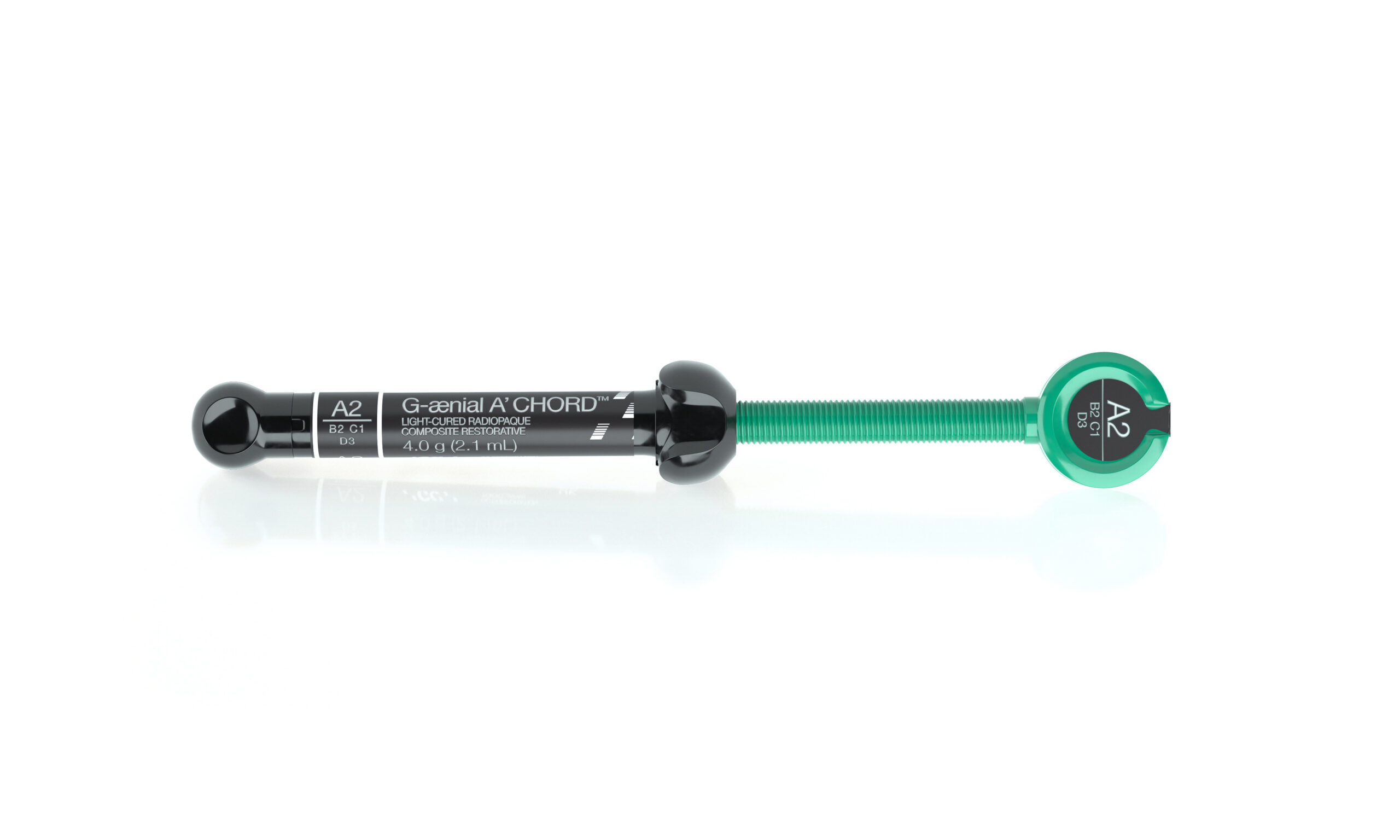

Freehand buildup
Best suited when: Patient has simple treatment needs where limited surface has been affected. Using G-ænial ACHORD provides great handling, aesthetics and resistance to wear.
Needed tools: model with final design and silicone key


Courtesy of Dr R. Zunzarren, France

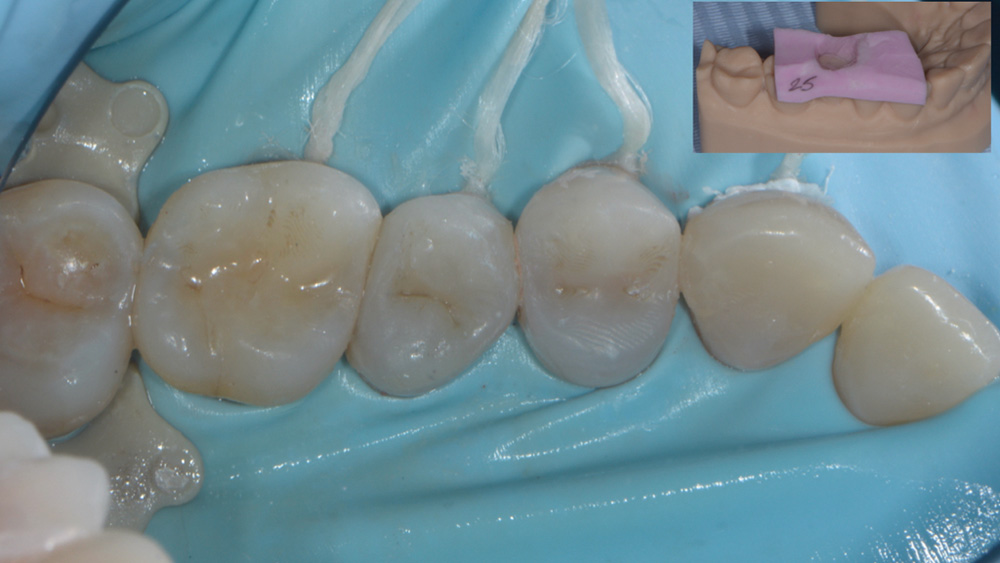
Stamp technique
Best suited when: Patient has a moderately complex treatment need where multiple teeth are affected by wear.
This technique is similar to the Injection Moulding Technique but using paste composite to build up. Using G-ænial A’CHORD with the stamp technique gives the restoration beautiful gloss that lasts.
Needed tools: model with alternate teeth treated; model with all teeth treated; rigid transparent silicone key or, alternatively: rigid silicone relined with EXACLEAR



Courtesy of Prof M. Peumans, Belgium

Injection Moulding Technique (IMT)
Best suited when: Patient has a more complex treatment need where multiple teeth are affected by wear. This technique is great to transfer a detailed tooth design into the mouth in a fast and predictable way. Using
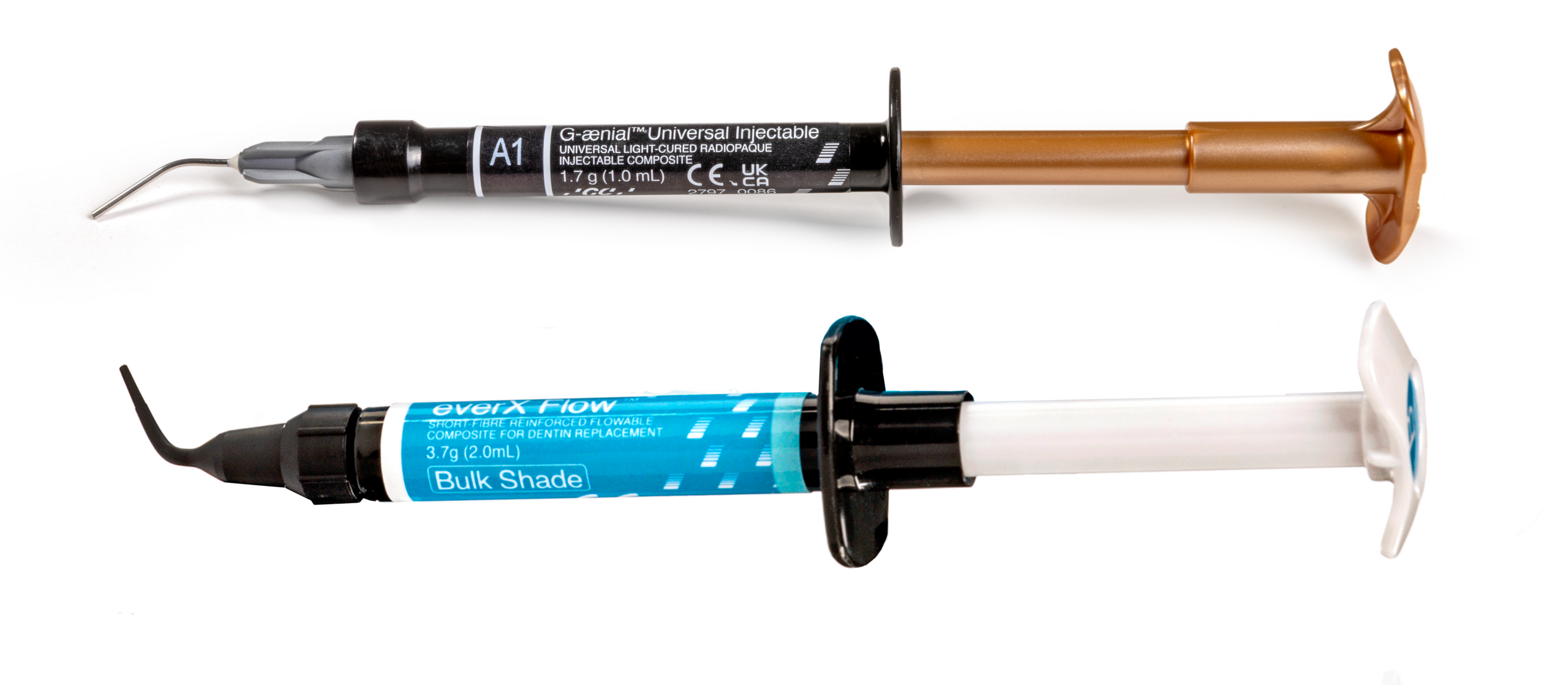
G-ænial Universal Injectable, our strongest restorative with ideal thixotropy, is preferred for best results.
Needed tools: model with alternate teeth treated; model with all teeth treated; transparent silicone key
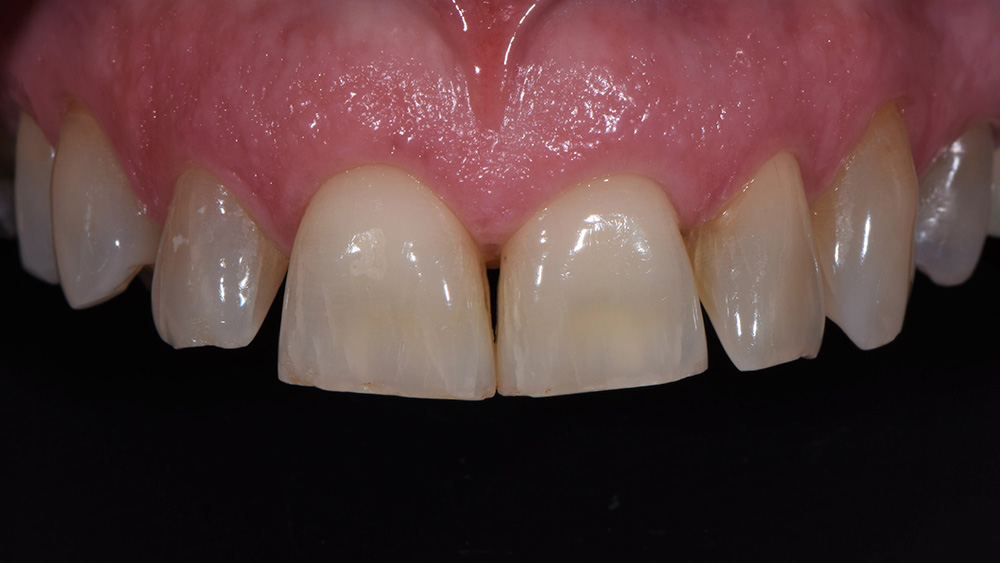


Courtesy of Dr M. Fostiropoulou, Greece
TIP!
Looking for additional protection against fractures? Apply everX Flow as a dentine replacement before completing the restoration using one of the three proposed techniques.

Material selection
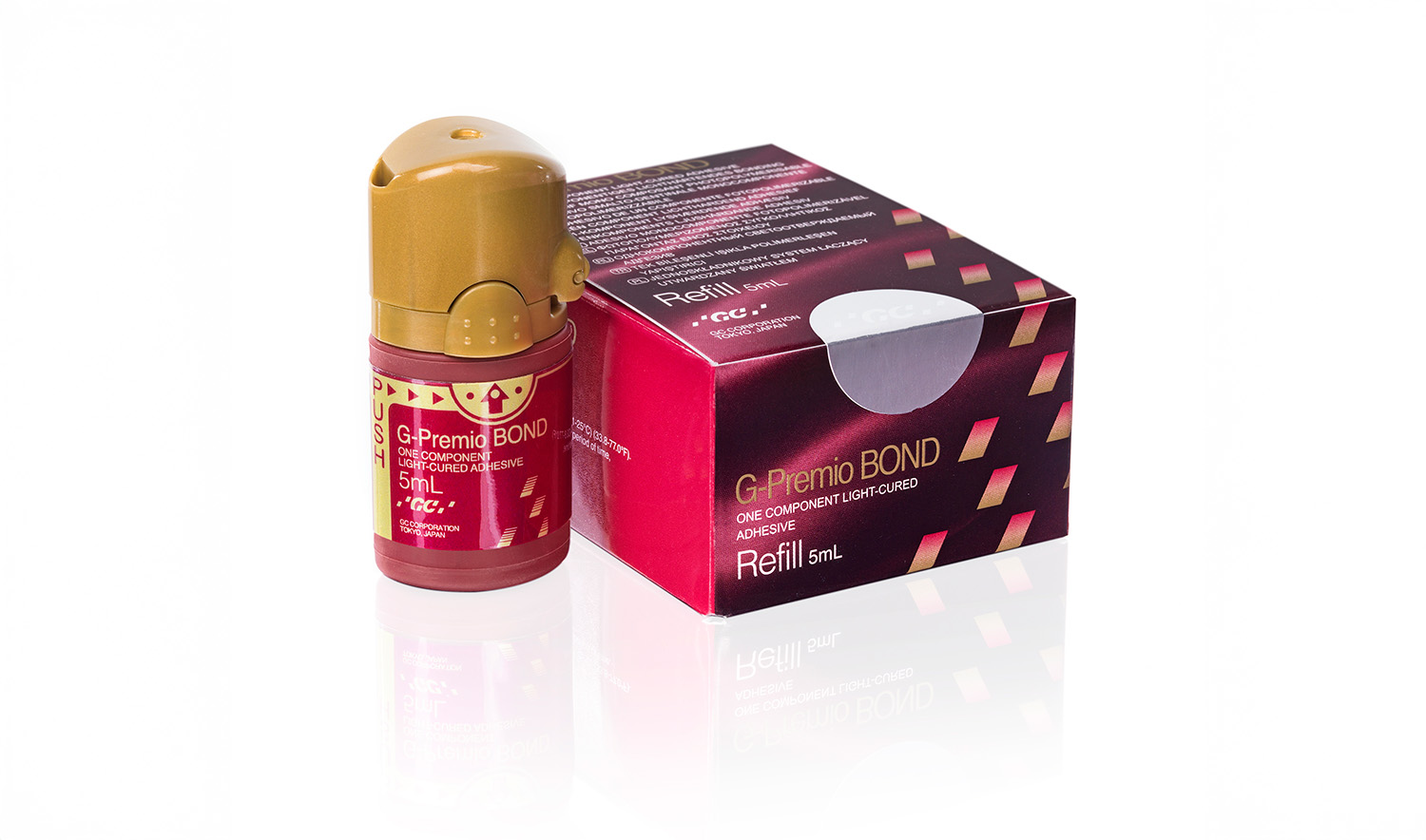
- Quick bonding procedure and cost-efficient dispensing with 300 drops per bottle
- Ideal to block hypersensitivity caused by wear

- Long-lasting gloss, preserving your aesthetics even longer for your freehand or stamp technique
- The true-to-nature fluorescence ensures that your wear solution is invisible under any light

- Superior wear resistance, making it an ideal composite to treat wear with
- Self-polishing ability for long term gloss and reduced wear of antagonist

- Strengthening teeth in case of heavy occlusal loading
- Very high fracture resistance to inhibit shock effects caused by bruxism
Indirect restorations

Clear communication between clinician and laboratory is key to achieving a functional and aesthetic rehabilitation.
Intermediate phase
When treating severe tooth wear, an important step is the transitional phase, during which the new VDO, is tested before starting definitive treatments.
Key parameters to evaluate during the transitional phase:

Absence of pain

Function (e.g. occlusion)

Aesthetics

Speech

Adaptation/comfort with new VDO

Conventional temporisation

Material selection
| PMMA | Composite Resin (e.g. bis- acryl material, direct composite, ...) | |
|---|---|---|
| Features |
|
|

3D printable light-curing composite for temporary crowns & bridges
- Excellent stable mechanical properties
- MMA-free/for DLP printing
- Compatible with OPTIGLAZE color
More information

Dual-cure bisacrylic composite for temporary crowns & bridges
- Non-sticky handling
- High fracture toughness
- Quick polish, lasting gloss
- Repairable and rebaseable
Final restoration
The choice of the restoration in tooth wear cases should follow a minimally invasive principle, trying to preserve as much healthy tooth structure as possible. The selection of the kind of the restoration depends on how much tooth structure is lost and on the remaining tooth integrity.
Veneer

Rounded internal angles
Keep minimum thickness accordingly to manufacturer’s instructions
If possible, the restoration should be located in the enamel
Sharp finishing line on the enamel to avoid chipping of the restoration
- Minor to moderate tooth structure loss with enamel support
- Minimal functional loading on veneers
- Wear mainly confined to enamel or superficial dentin; moderate loss of tooth length
More info on veneer preparation
Overlay

6°-10° axial wall taper
Keep minimum thickness accordingly to manufacturer’s instructions
Smooth finish line
Rounded intersection corner
- Moderate to severe tooth structure loss involving cuspal structure
- Partial preservation of axial walls
- Occlusal instability
More info on indirect partial restorations
Crown

6°-10° axial wall taper
Keep minimum thickness accordingly to manufacturer’s instructions
Smooth finish line
Rounded intersection corner
- Weakened structure, severe wear or damage
- Extensive dentin exposure with minimal or no enamel support
- High incisal/occlusal load when veneers or overlays are insufficient
Discover the entire crown workflow
Material selection

Initial LiSi Block & Press
Lithium disilicate solutions for milling and pressing
- High wear resistance
- Strong, easy milling
- Smooth, low-roughness surface
- HDM technology
- Beautiful aesthetics
More information for dental techniciansMore info for dentists

CERASMART270
Force absorbing hybrid ceramic CAD/CAM block
- Homogeneous filler dispersion – strong, smooth and long-lasting
- Buffers heavy bit forces
- Easy chairside repair
- Compatible with OPTIGLAZE color

Initial zirconia solutions
High-strength zirconia disks and characterisation options
- Omni-functional: broad range of indications, regular or fast sintering
- Thin restorations for vertiprep possible
- Available in ST, HT, UHT or Multilayer
Discover our Zr solutions

|

|

|
||
|---|---|---|---|---|
| Category | Lithium disilicate | Hybrid ceramic | Zirconia | |
| Materials | Initial LiSi Block | CERASMART270 | Initial Zirconia Disk & Initial Zirconia Disk ML Elite |
|
| Physical properties |
Biaxial Flexural Strength (MPa) |
408 | 270 | 600-1200 |
| Elasticity/Buffering masticatory forces |
- | +++ | - | |
| Preventing antagonist wear | + | +++ | + | |
| Handling | Intra-oral repair | + | +++ | + |
| Polishability | +++ | +++ | + | |
| Fast Processing | ++ | +++ | + | |
| Aesthetics | Aesthetics | +++ | ++ | ++ |
| Anterior indications | +++ | + | + | |
| Characterisation options | IQ ONE SQIN Initial LiSi |
OPTIGLAZE color/ GRADIA PLUS Lustre Paint |
Initial Zr-FS / Initial IQ ONE SQIN |
Finishing

Polishing of Initial LiSi Block restoration

Remove sprue with a diamond disc.

Polish with coarse polishing disc.

Polish with medium polishing disc.

Finish with fine polishing disc.

Polish with goat hair wheel and GRADIA DIAPOLISHER paste (optional).

Final result.
Painting of Initial LiSi Block restoration
Remove sprue with a diamond disc.

Set the base by glazing with L-NFL shade of Initial IQ Lustre Pastes ONE.


Paint with L-A shade of Initial IQ Lustre Pastes ONE for dentin effects.

Fire.
Detailed firing instructions can be found in the Initial Lustre Pastes ONE Technical Manual.

Final result.

Polishing of CERASMART270 restoration

Remove sprue with a diamond disc.

Polish with medium polishing disc.

Polish with fine polishing disc.

Polish with goat hair wheel and GRADIA DIAPOLISHER paste (optional).

Final result.
Painting of CERASMART270 restoration

Remove sprue with a diamond disc.

Paint the fissures and cervical areas with OPTIGLAZE color.

Add gloss with OPTIGLAZE color Clear HV.

Light-cure according to the manufacturer’s instructions.

Final result.
Polishing of Zirconia restoration


Use only dedicated dental instruments for preparation & finishing of zirconium, lithium disilicate & veneering ceramics.


Individual adjustment of gloss level can be done using dedicated instruments and diamond paste.
Courtesy of MDT C. Fischer, Germany
Painting of Zirconia restoration


The framework is shaped and contoured using dedicated instruments. After pre-polishing with a dedicated ceramic polisher, the finished framework as well as the surfaces, which require ceramic application, are softly sandblasted with 50 microns Alu-Oxid at max. 1,5 bar pressure.


After the final firing, an unsurpassed vitality and a very natural glaze is easily obtained.
The convincing natural end-result is achieved in just one Lustre Pastes ONE firing!
Courtesy of MDT M. Brüsch, Germany
Luting

Lithium disilicate
Etch with 5-9% HF for 20 sec.

Hybrid ceramics
Etch with 5-9% HF for 60 sec OR
Sandblast (30–50 μm Al2O3, ~1 bar).

Zirconia
Sandblast (25- 50 μm Al2O3, 1–2 bar).
Restoration primer with silane is required for glass ceramics and hybrid ceramics;
Restoration primer with MDP is optional for zirconia with G-CEM ONE.
G-Multi PRIMER can be used for any restoration.
Restoration primer with MDP is optional for zirconia with G-CEM ONE.
G-Multi PRIMER can be used for any restoration.
G-CEM ONE
Universal resin cement

- Universal and self-adhesive
- High bond strength in all modes
- Resistant to discolouration
- High wear resistance
Tooth primer is recommended for preparations that lack retention and resistance shape.
G-CEM ONE Adhesive Enhancing Primer (or G-Premio BOND + light-cure) can be used for any occasion.
G-CEM ONE Adhesive Enhancing Primer (or G-Premio BOND + light-cure) can be used for any occasion.


No restoration primer
required with FujiCEM Evolve
required with FujiCEM Evolve
FujiCEM Evolve
Resin modified glass ionomer cement

- Moisture-tolerant & low water absorption
- Fast workflow
- Easy clean-up
- Excellent for zirconia
No tooth primer required
with FujiCEM Evolve
with FujiCEM Evolve
Prepare the teeth for the treatment

Check gingival health and clean all the teeth.
Courtesy of Prof. M. Peumans, Belgium

Clean the surface with pumice and water.


Sandblasting the surface is recommended to ensure a clean working area.
Courtesy of Dr. P. Swerts, Belgium
Cases

Extraoral front view before treatment. The shortened and flattened upper anterior crowns significantly affected the patient’s smile aesthetics and contributed to a notable psychological burden.

Intraoral view before treatment: incisal grooving and occlusal cupping indicate a strong erosive component. Note that the right side is more affected than the left side, which might indicate an habitual asymmetric occlusal loading. Amalgam restorations appear shiny and untarnished, which might indicate an acidic environment.

Intraoral buccal view before treatment. Wide and flattened erosive areas can be seen on the buccal surfaces.

Facially driven workflow: Intraoral mock-up to test the length of the anterior teeth

A bilaminar technique using G-ænial A’CHORD (GC) and
G-ænial Universal Injectable (GC) as the final layer was employed for the anterior restorations. All adhesive procedures were carried out under rubber dam.

Semi-indirectly prepared injection moulding restorations reduce chair time while making finishing easier.
a: G-ænial Universal Injectable restorations on a printed model.
b: teeth were isolated and gently sandblasted prior to luting.

Occlusal view of the lower arch. The Initial LiSi Press restorations were not veneered, resulting in an exceptionally smooth, highly polished surface that maintains excellent aesthetics.

Intraoral buccal view after treatment.

A natural surface morphology and texture were restored after treatment.

Extraoral frontal view after treatment. The natural youthful tooth length and curvature were restored, with the upper incisors gently following the contour of the lower lip and an increased exposure of the teeth during smiling.
Courtesy of Dr Zohaib Al, UK
Prevention and maintenance
A holistic approach is paramount when dealing with wear. It is necessary to assess its underlying risk factors (e.g. disease, eating habits,…) prior to establishing any treatment strategy. A regular surveillance of the wear progression is needed before intervention, especially at early stages of wear. Using a tooth wear index, pictures, or 3D scans can help to analyse wear progression over time. Finally, the patient must be aware of any wear-inducing habits and must comply with preventing further damage to the tooth tissue or eventual restorations for a successful outcome.

Night Guards
Prevent further wear by recommending a night guard when clinically indicated

Oral Hygiene
Ensure your patient brushes frequently, but not too aggressively, and with the right tools

Attitude
Change patients’ perspective on how to treat and protect their teeth and restorations

Diet
Limit acidic beverages and food, such as energy drinks and citrus fruits, which accelerate wear
In office maintenance

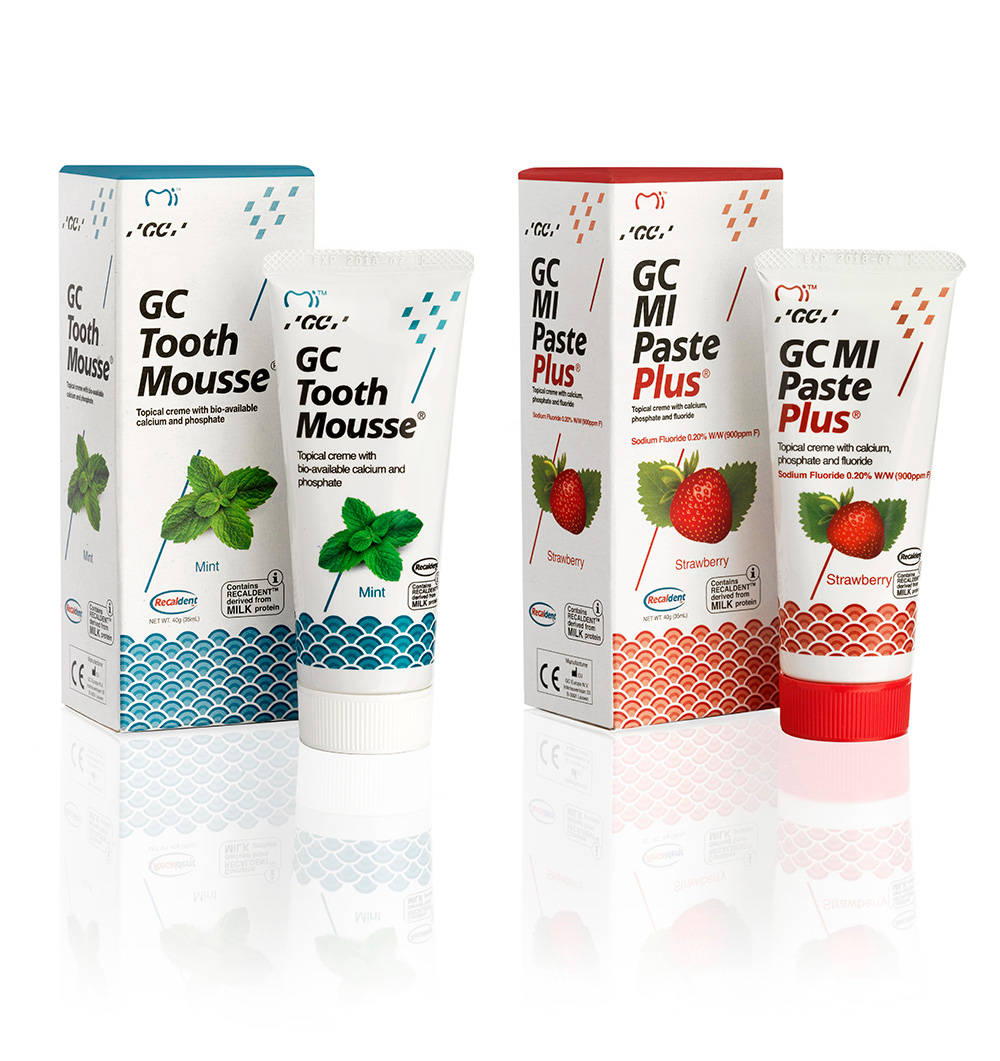
MI Varnish, Tooth Mousse and MI Paste Plus contain RECALDENT™ CPP-ACP which:
- Promotes the remineralisation of enamel and an increase in surface hardness. When the surfaces are remineralising faster and become stronger, wear can be inhibited.
- Desensitises teeth with exposed dentin
- Provides extra protection against future acid attacks
RECALDENT™ and RECALDENT™ logo are trademarks of Mondelēz International Group used under license.
RECALDENT™ is derived from milk casein. Do not use on patients with a milk protein, hydroxybenzoates or soy bean allergy.

At home maintenance
FAQ
How often do you recall and reassess wear progression post-treatment?
Recalls post-treatment are often indicated by your scoring-/evaluation system of choice by severity and risk. This could mean that for stable wear, yearly visits could be sufficient, while it could be preferred to see your high-risk patients in a timespan of less than 6 months.
Are night guards useful or not?
Night guards act as a physical barrier to protect teeth from attritional forces. They are strongly recommended for patients with nightly bruxism. However, for patients with erosion or malocclusion, their use may be counterproductive.
When should pre-restorative orthodontics be considered in treating wear?
Patients with tooth wear often present with misaligned teeth, as progressive wear reduces tooth size over time. Hence, orthodontic treatment nearly always offers significant benefits in these cases. However, it’s natural for patients to have concerns or feel hesitant before starting treatment. A great way to figure out if restorative results can be achieved without orthodontics is to carry out an additive mockup. This also serves as the patient’s consent and provides documented evidence to proceed with orthodontics.
What is the best treatment for patients with moderate wear lesions?
There is no single answer to what treatment should be used at all times. There is a great variety of dental material to choose from and techniques that can be implemented. A scoring-/evaluation system might help to understand the severity of the case and guide possible treatment options. However, the final choice generally depends on the patient’s wishes, financial resources and healthcare coverage, invasiveness of treatment, aesthetics and perceived longevity.
Do I need a deprogrammer when dealing with moderate wear?
Yes, in case you are changing the occlusal vertical dimension. It offers a reproducible occlusal position throughout all the treatment stages.
What are some key considerations to have in mind when establishing a new OVD?
The primary objective is a stable, comfortable, and functional occlusion. A mechanically perfect occlusion is not always necessary to achieve a comfortable and successful result. The new OVD is generally determined by the amount added to the anterior teeth. Changes to OVD typically range from 2 to 5 mm.


When treating wear in cases with large cavities, should I be concerned about the polymerisation shrinkage stress?
When treating wear most surfaces are flat, so the C-factor is low. This means that the shrinkage stress is quite low. It is always advised to use a composite designed with the latest technology, which will have low polymerization shrinkage and high conversion rate such as materials like G-ænial Universal Injectable and G-ænial A’CHORD.
How long do treatments with composite last for wear cases?
Research shows that patients treated for severe tooth wear in full mouth restoration have a low failure rate of 2.3% over the span of 5.5 years. Direct resin composite can offer an acceptable medium-term option for the treatment of severe, generalised tooth wear; molar restorations may require higher maintenance.
How to ensure adequate bond strength on worn, sclerotic, or eroded enamel/dentin?
Preparation of the surface is key to ensure adequate bonding strength. Roughen your surface with a bur for increased retention and achieve a clean working area by sandblasting and by making use of rubber dam. Make use of a trusted, well documented bonding system like G-Premio BOND and bond as much as possible to (healthy) enamel.
Why are MI Paste Plus and Tooth Mousse good for wear cases?
Recaldent™ (CPP-ACP) promotes the remineralisation of enamel, desensitises, lowers sensitivity and provides extra protection against acidic attacks, and therefore ideal to counteract erosion. Both MI Paste Plus and Tooth Mousse are easy to apply, well accepted, and can be used at home by the patient.
Downloads

Direct restorations
Indirect restorations
Articles